Imagem
Associação
-
 [i]
[i] -
 [i]
[i] -
 [i]
[i] -
 [i]
[i] -
 [i]
[i] -
 [i]
[i] -
 [i]
[i] -
 [i]
[i] -
 [i]
[i] -
 [i]
[i] -
 [i]
[i]
Reflexão
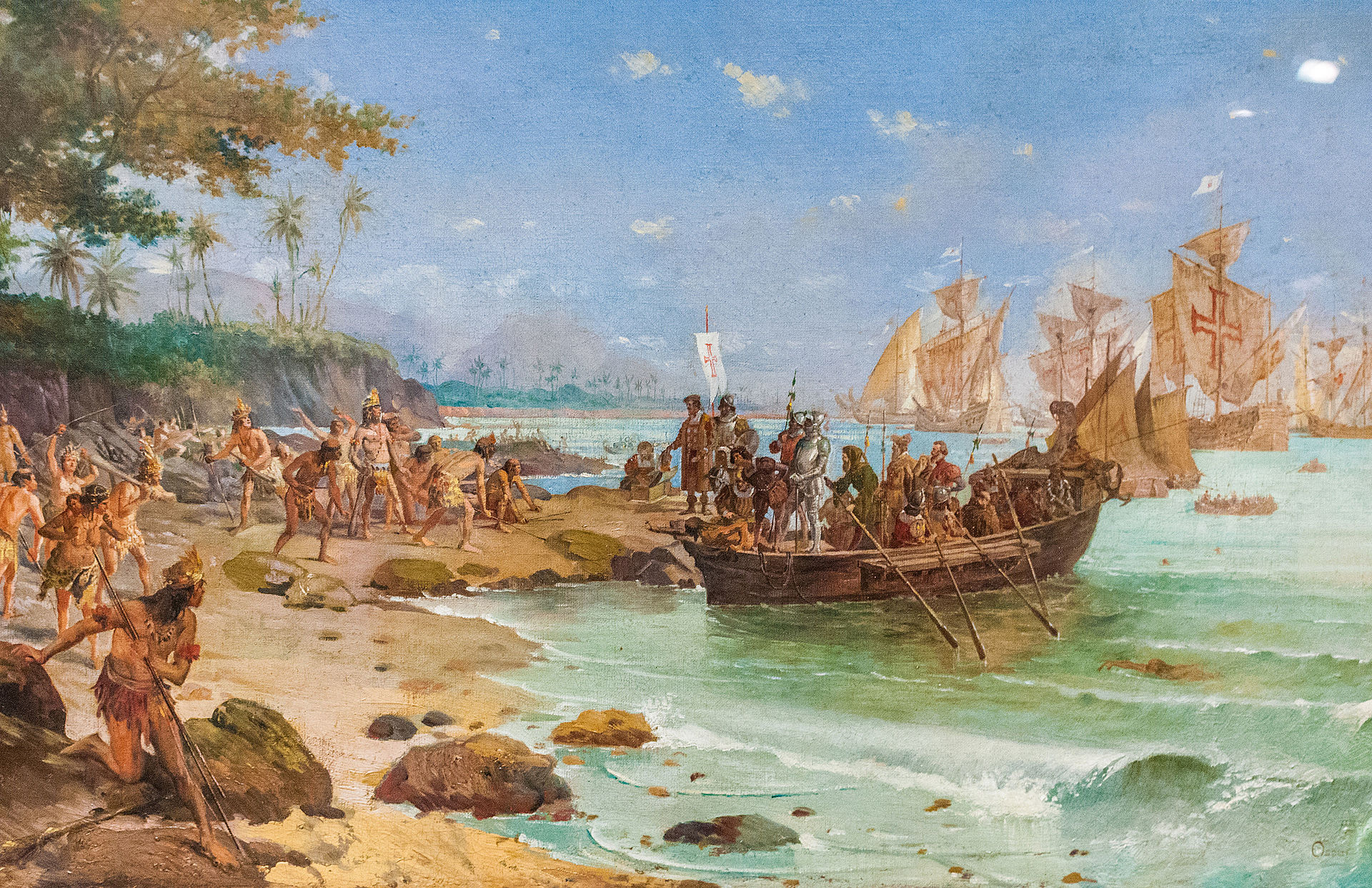
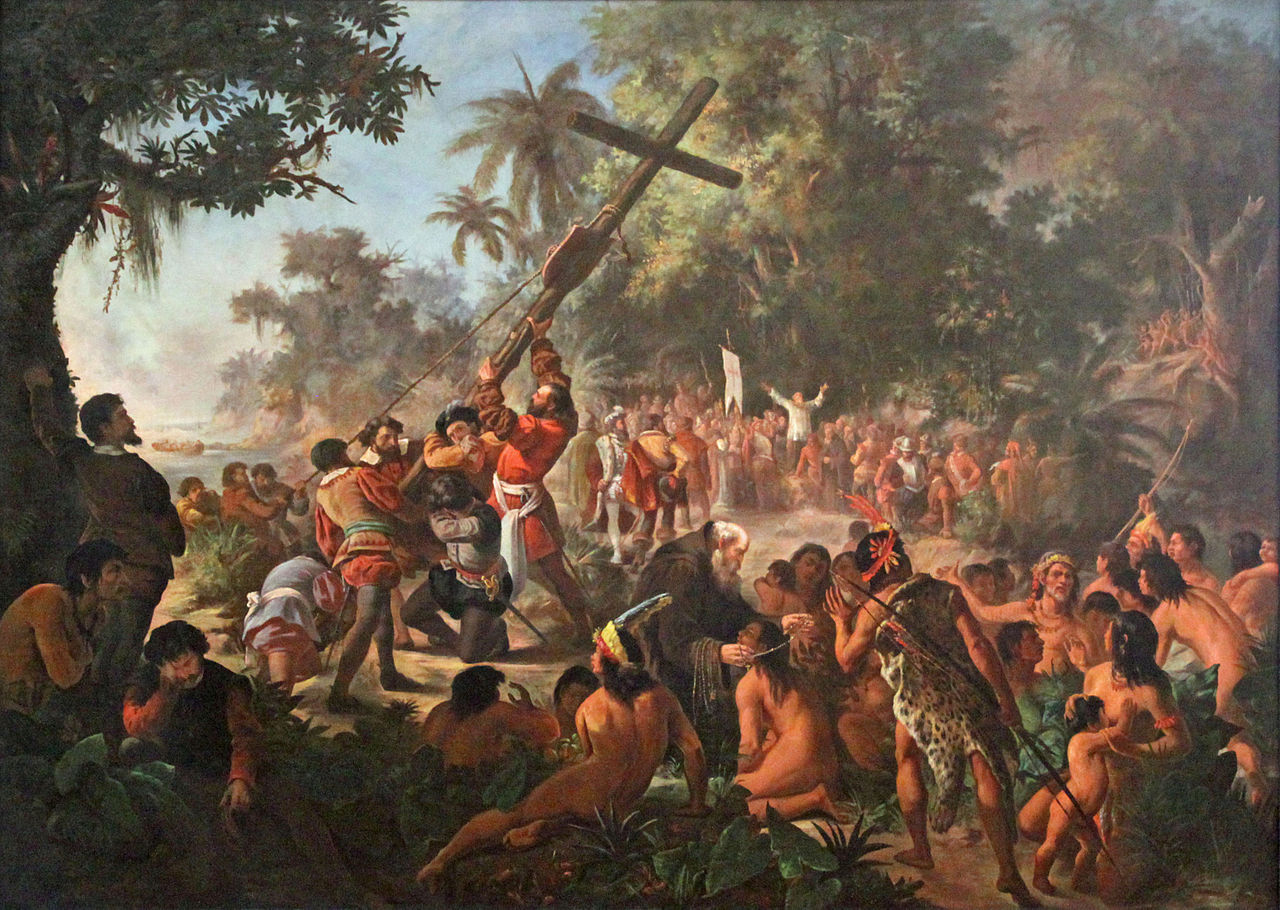
Landing of Pedro Álvares Cabral in Porto Seguro
A painting depicting the moments of first contact between the Portuguese colonisers and the indigenous inhabitants of the territory we now call Brazil, specifically in Porto Seguro, Bahia.
The image is divided into two opposing moments, following Western binary thinking: on the right-hand side, the Portuguese navigators, dressed and wielding flags of the Cross of Malta, arrive on land with a posture that determines calm and rationality. On this side of the image, the colours suggest something positive and divine, bringing blue and white light to the scene; and on the other, the indigenous Brazilians, wearing clothes that only cover their sexual organs (wasn't this the author's choice?), in positions that indicate excitement and curiosity. On this side of the image, darker and more sombre tones are used, trying to confuse the characters with the forest itself.
The binarity of these oppositions (dressed/dressed, straight/lowered, light/dark) are ideas that have been present since the first moment of colonisation and are intended to demonstrate other, deeper binary concepts. The construction of the ‘Other’, the savage as opposed to the civilised, the Christian as opposed to the pagan, ultimately serves to convey one simple idea: the superiority of the coloniser over the colonised. Only in this way can the atrocities committed be justified.
The painting was realised at the turn of the 20th century, at a time when the São Paulo government wanted to acquire and commission works that would help build an illustrated narrative of the Brazilian nation, in order to exalt the new Republic and the state. Oscar Pereira da Silva saw this as an opportunity to become one of the most important Brazilian painters of the time, which raises several questions about the historical representation that is made here and its objectives.
Works like these are often used as evidence of historical events, even though they were made centuries after the actual arrival of Pedro Álvares Cabral and, like any other type of artistic representation, they are nothing more than an interpretation - an interpretation subject to the social, political, economic and racial context of those who produce them.